


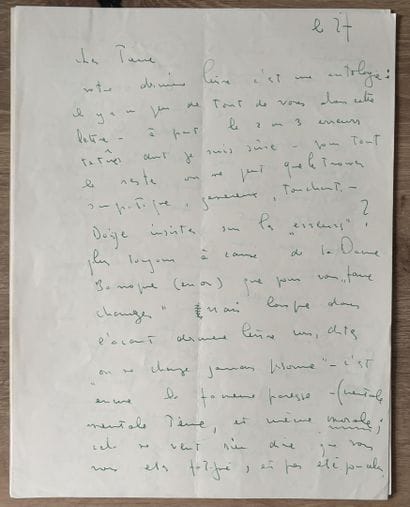
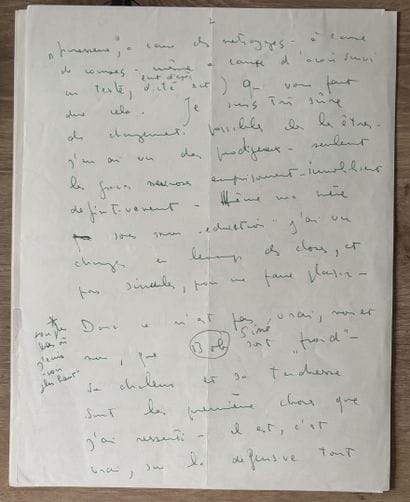
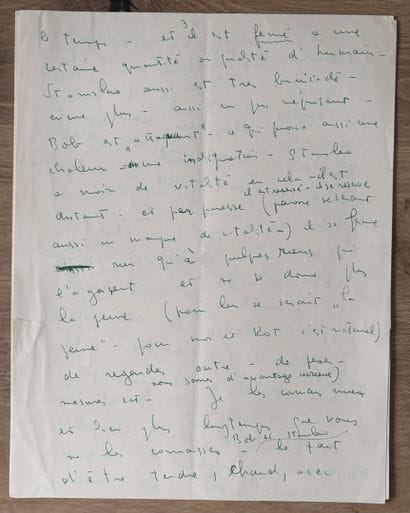
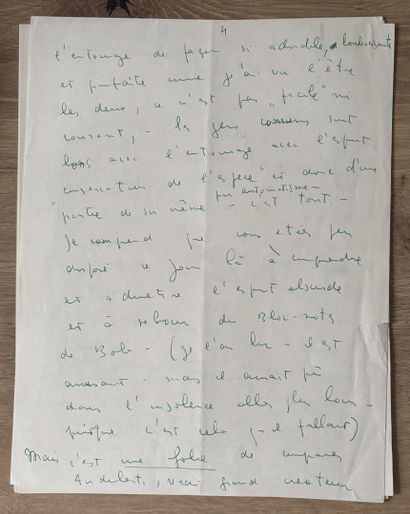
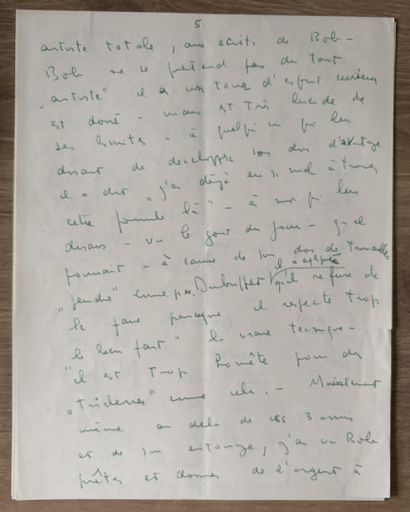
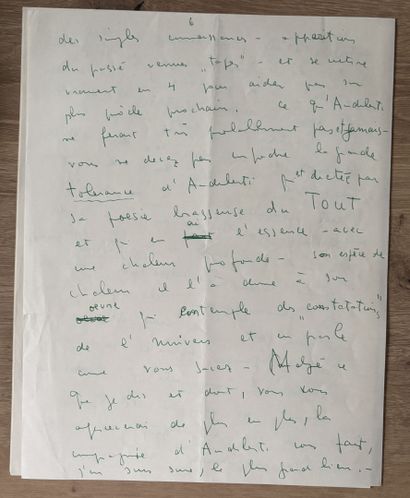
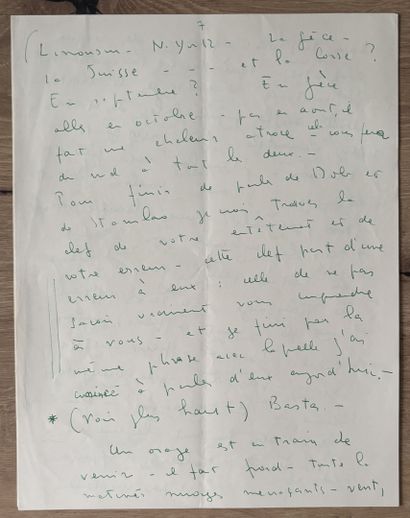
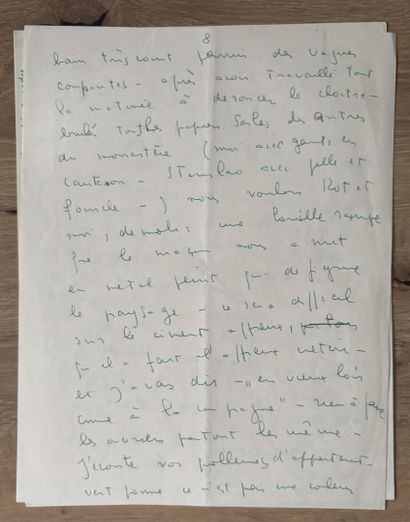
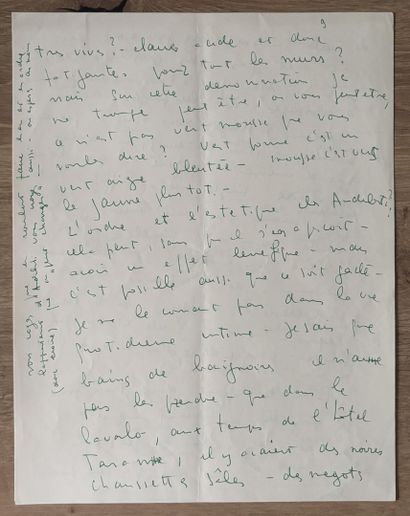
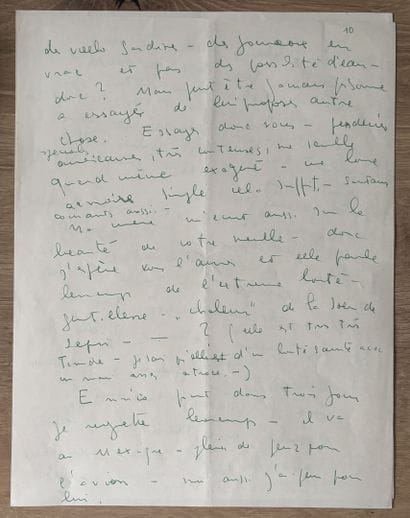
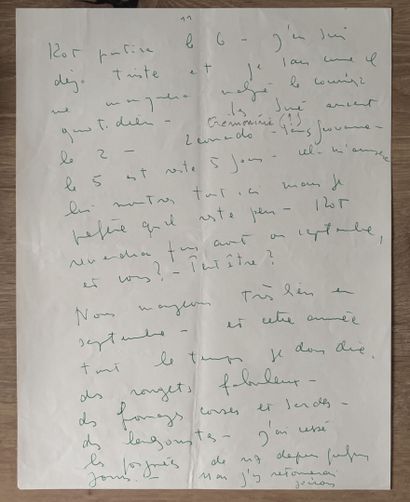
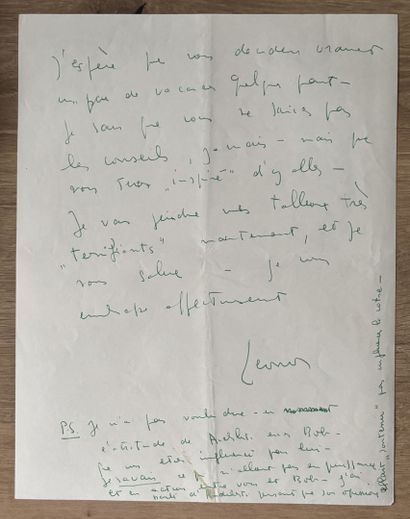
Sale information - AUTOGRAPHS & MANUSCRIPTS: From Berlioz to Leonor Fini—Two Centuries of Autographs and Creative Work
Public viewing by appointment, Monday through Friday
contact@arp-auction.com
Sales conditions - AUTOGRAPHS & MANUSCRIPTS: From Berlioz to Leonor Fini—Two Centuries of Autographs and Creative Work
Conditions générales de vente
« ART RESEARCH PARIS » et « ARP-AUCTION » sont des marques déposées et détenues par la société ART RESEARCH PARIS SAS, Société par actions simplifiée au capital social de 30 000 €, Société de ventes volontaires aux enchères publiques déclarée sous le n° dont le siège social est situé 68 rue Pergolèse 75116 PARIS – RCS PARIS n°ART RESEARCH PARIS SAS est un opérateur de ventes volontaires régi par l’article L. 321-4 et suivants du Code de commerce. ART RESEARCH PARIS SAS est soumis au Recueil des obligations déontologiques des opérateurs de ventes volontaires de meubles aux enchères publiques ayant valeur réglementaire par arrêté du 30 mars 2022. En sa qualité, ART RESEARCH PARIS SAS agit habituellement comme mandataire du vendeur, lequel contracte avec l’acquéreur. Les rapports entre ART RESEARCH PARIS SAS et tout enchérisseur sont soumis aux présentes conditions générales d’achat, qui pourront être amendées par des informations données par écrit ou par voie orale avant la vente. Celles-ci seront portées au procès-verbal de la vente. La présente version française des conditions générales d’achat est la seule faisant foi. La version anglaise est donnée à titre indicatif.
1 - DEFINITIONS – SYMBOLES « Acheteur » , « Acquéreur » ou « Adjudicataire », sont les termes qui désignent l’Enchérisseur (ou le cas échéant son mandant dont l’identité est connue), qui a porté l’enchère la plus élevée, acceptée par le commissaire-priseur. « Consommateur » désigne toute personne physique ayant sa résidence au sein de l’Union Européenne désignée Adjudicataire d’un lot et dont l’achat n’entre pas dans le cadre de son activité commerciale, industrielle, artisanale ou libérale. « Enchérisseur » désigne toute personne, physique ou morale, qui envisage, tente de porter ou porte une enchère, par quelque moyen que ce soit, y compris l’Acheteur ou l’Adjudicataire. « Lot » désigne tout objet déposé et/ou offert à la Vente. « Ordre d’achat » : Un enchérisseur qui ne peut assister à la vente peut demander à l’opérateur de ventes volontaires d’exécuter un ordre d’achat pour un ou plusieurs lots en fixant le prix maximum d’achat. Il constitue un engagement ferme d’acheter pris par l’enchérisseur. « Ordre téléphonique » : un enchérisseur qui ne peut assister à la vente peut demander à l’opérateur de ventes volontaires d’exécuter un ordre téléphonique. ART RESEARCH PARIS SAS effectuera les diligences pour le joindre par téléphone durant la vente, lorsque les lots qu’il a mentionnés sont soumis aux enchères, afin qu’il puisse en enchérir. ART RESEARCH PARIS SAS ne pourra engager sa responsabilité notamment si la liaison téléphonique n’est pas établie, est établie tardivement, ou en cas d’erreur ou d’omissions relatives à la réception des enchères par téléphone. « Professionnel » désigne toute personne physique ou morale qui prend part à une Vente dans le cadre de son activité commerciale, industrielle, artisanale ou libérale. « Vente Live » désigne une vente retransmise sur Internet en temps réel permettant aux enchérisseurs d’enchérir à distance pendant la vente. Le commissaire-priseur suit, via un écran de contrôle ou par l’intermédiaire d’un cyber-clerc, les enchères effectuées sur Internet. « Vente Online » désigne la vente aux enchères intégralement dématérialisée, effectuée exclusivement par voie électronique, sur une plateforme dédiée. Il s’agit d’une vente en temps déterminée et non en temps réel. ƒ Lot en importation temporaire au sein de l’Union Européenne (5,5%) ƒƒ Lot en importation temporaire au sein de l’Union Européenne (20%) Lot sur lequel ART RESEARCH PARIS SAS a un intérêt financier direct, généralement dû à une garantie de prix minimum pour le vendeur par ART RESEARCH PARIS SAS ou par ART RESEARCH PARIS SAS et un tiers. Δ Lot sur lequel ART RESEARCH PARIS SAS a un intérêt économique, généralement équivalent à un droit de propriété ¤ Lot assujetti au droit de suite, à la charge de l’acheteur. # Lot nécessitant un dépôt de garantie pour bénéficier de la possibilité d’enchérir § Lot appartenant à un actionnaire, un collaborateur ou un expert d’ART RESEARCH PARIS SAS. ~ Lot réalisé en tout ou partie d’espèces protégées et/ou dont le commerce est régulé. Le symbole ou l’absence de symbole ne garantit pas qu’il n’y ait aucune restriction concernant l’import ou l’export de ce lot.
2 - GARANTIES 2.1 Garanties données par le vendeur Le vendeur garantit à ART RESEARCH PARIS SAS et à l’acheteur qu’il est le propriétaire non contesté des biens mis en vente, lesquels ne subissent aucune réclamation, revendication, contestation ou saisie, ni aucune réserve ou nantissement et qu’il a la capacité de transférer la propriété des desdits biens valablement. Le vendeur garantit que les biens sont en règle avec la réglementation douanière française et internationale et que le bien se trouve en situation régulière sur le territoire français, incluant le fait que les déclarations et démarches administratives nécessaires à l'importation ou à l’exportation ont été dûment effectuées et les taxes exigibles dûment réglées. Le vendeur garantit également que le bien déposé n’est lié à aucune activité criminelle et qu’il n’est ni sous enquête, ni inculpé ou reconnu coupable, sans que cette énumération ne soit limitative, d’évasion fiscale, de blanchiment d’argent, d’activités terroristes ou d’autres activités criminelles. Le vendeur garantit enfin que toute partie électrique ou mécanique d’un lot offert à la vente est sans risque s’ils sont utilisés dans le but auquel ils sont destinés et sont exempts de tout vice non apparent, non décelable par un examen externe, qui pourrait s’avérer dangereux pour la vie humaine ou la santé. 2.2 Garanties données par les acheteurs et les enchérisseurs Les enchérisseurs garantissent à ART RESEARCH PARIS SAS qu’ils ont la capacité d’enchérir. Ils garantissent qu’ils ne font pas l’objet de sanctions commerciales, ou toutes autres mesures restrictives dans leur pays d’établissement ni ne sont visés par de telles sanctions dans le cadre des lois françaises, du droit de l’Union européenne et international. Pour les personnes morales, elles garantissent qu’elles ne sont pas détenues, même partiellement, ni ne sont contrôlées par une ou plusieurs personnes faisant l’objet de telles sanctions. Ils garantissent également que les fonds servant à l’achat des lots ne proviennent pas d’une activité délictueuse ou criminelle, et qu’ils ne font pas l’objet d’une enquête et que les biens achetés ne seront pas utilisées à de telles fins. ART RESEARCH PARIS SAS se réserve le droit de vérifier l’origine des fonds reçus et de se renseigner sur toute personne qui réalise des transactions avec elle, ainsi que de retenir le lot ou le produit de la vente, voire d’annuler la vente, jusqu’à ce que ces vérifications aient pu être effectuées. 2.3 Catalogue et descriptifs des biens proposés à la vente 2.3.1 Descriptif : Les indications figurant au catalogue sont établies par ART RESEARCH PARIS SAS et l’expert, qui l’assiste le cas échéant, avec toute la diligence requise par un opérateur de ventes volontaires de meubles aux enchères publiques, sous réserve des notifications, déclarations, rectifications, annoncées verbalement au moment de ° ARP - Joailliers Designers - 10 Févrierla présentation de l’objet et portées au procès-verbal de la vente. Les descriptifs sont rédigés conformément aux directives du Décret n°81-255 du 3 mars 1981 sur la répression des fraudes en matière de transactions d'œuvres d'art et d'objets de collection, en fonction des connaissances artistiques et scientifiques à la date de la vente. L’état des cadres n’est pas garanti. Les couleurs des lots reproduits au catalogue, sur le site internet d’ART RESEARCH PARIS SAS ou des plateformes partenaires peuvent différer de la réalité. Les descriptions en autres langues et les indications de dimensions en inches ne sont données qu’à titre indicatif et ne pourront être à l’origine d’une réclamation. En cas de contestations notamment sur l’authenticité ou l’origine des objets vendus, ART RESEARCH PARIS SAS est tenue par une obligation de moyens, impliquant toutes les diligences qui lui sont possibles au moment de la mise en vente. Sa responsabilité ne pourrait être engagée qu’à la condition expresse qu’une faute personnelle soit prouvée ou démontrée à son encontre. Les photographies figurant dans les catalogues sont destinées uniquement à l’identification des lots. Elles n’ont aucune valeur contractuelle, sauf mention contraire. ART RESEARCH PARIS SAS ne garantit ni le fonctionnement, ni la sécurité des objets mécaniques ou électriques avant la vente, cette responsabilité incombant aux potentiels enchérisseurs. 2.3.2 Estimation : Les estimations sont fournies à titre indicatif et ne peuvent être considérées comme impliquant la garantie que le bien sera vendu au prix estimé ou compris dans la fourchette d’estimations, l’adjudication résultant du libre jeu des enchères. L’estimation ne pourra être inférieure au prix de réserve, ce dernier pouvant être modifié jusqu’au moment de la vente. Les estimations peuvent être données en plusieurs monnaies à titre indicatif. L’arrondi de ces conversions peut entraîner une légère modification des arrondis légaux. 2.4 Rapports de condition Pour les objets dont le montant de l’estimation basse excède 1 000 €, un rapport de condition sur l’état général des lots pourra être communiqué sur demande avant la vente, et ce, jusqu’à 24 heures avant le début de la vente. Il s’agit d’un service complémentaire proposé par ART RESEARCH PARIS SAS, laquelle n’est pas tenue de le délivrer. Les lots sont vendus dans l’état dans lequel ils se trouvent au moment de la vente. Aucune demande de rapport de condition ne sera admise une fois l’adjudication prononcée, les acquéreurs potentiels étant invités à examiner physiquement les biens lors d’une exposition publique, ou sur rendez-vous, ou à demander un rapport de condition, préalablement à la vente.
3 - INSCRIPTION AUX VENTES Dans le cadre de ses activités de ventes aux enchères, ART RESEARCH PARIS SAS est amenée à collecter des données à caractère personnel concernant sa clientèle. Les personnes concernées disposent d’un droit d’accès, de rectification et d’opposition sur leurs données personnelles en s’adressant directement à notre maison de vente. ART RESEARCH PARIS SAS pourra utiliser ces données à caractère personnel afin de satisfaire à ses obligations légales, et, sauf opposition des personnes concernées, aux fins d’exercice de son activité (notamment des opérations commerciales et de marketing). Ces données pourront également être communiquées aux autorités compétentes dès lors que la réglementation l’impose. 3.1 Bid office En vue de la bonne organisation et du déroulement des ventes, les enchérisseurs potentiels sont invités à se faire connaître avant la vente auprès du service enregistrement d’ART RESEARCH PARIS SAS, afin de permettre l’enregistrement de leurs données personnelles (une pièce d’identité ainsi qu’un relevé d’identité bancaire, ou tout autre document bancaire permettant la vérification de leur identité, seront demandés) : bids@arp-auction.com. ART RESEARCH PARIS SAS conserve la possibilité d’interdire l’accès à la salle de vente ou aux plateformes en ligne à tout acquéreur potentiel pour motif justifié, sans entraver la liberté des enchères. ART RESEARCH PARIS SAS sera autorisé à reproduire sur le procès-verbal de vente et sur le bordereau d’adjudication les renseignements qu’aura fourni l’adjudicataire avant la vente. Toute fausse indication engagera la responsabilité de l’adjudicataire. Dans l’hypothèse où l’adjudicataire ne se sera pas fait connaître auprès de nos services d’enregistrement avant la vente, il devra communiquer au service caisse les renseignements nécessaires dès l’adjudication du lot prononcée. Toute personne s’étant faite enregistrée auprès d’ART RESEARCH PARIS SAS dispose d’un droit d’accès et de rectification aux données nominatives fournies à ART RESEARCH PARIS SAS dans les conditions de la Loi du 6 juillet 1978 et du Règlement (UE)du Parlement européen et du Conseil du 27 avril 2016, relatif à la protection des personnes physiques à l'égard du traitement des données à caractère personnel et à la libre circulation de ces données : contact@arp-auction.com. Ces informations pourront être conservées dans un délai de cinq ans suivant la vente. Si elle l’estime nécessaire, la société peut demander un dépôt de garantie de fonds avant la vente. En cas d’enchères victorieuses, ce dépôt sera déduit du solde du bordereau d’adjudication. Dans le cas contraire, les fonds seront retournés sous 48 heures ouvrées par le même moyen de règlement et au déposant originel. Tout enchérisseur est censé agir pour son propre compte sauf information préalable de sa qualité de mandataire pour le compte d’un tiers, acceptée par ART RESEARCH PARIS SAS. L’adjudication entraînant transfert de propriété immédiat, toute personne qui se porte enchérisseur s’engage à régler personnellement et immédiatement le prix d’adjudication augmenté des frais à la charge de l’acquéreur et de tous impôts ou/et taxes qui pourraient être exigibles. Tous les lots adjugés seront facturés au nom et à l'adresse auxquels l’enchérisseur a été enregistré et ne pourront être transférés à d'autres noms et adresses une fois l’adjudication prononcée. 3.1.1 Enchères en salle : Chaque potentiel acquéreur pourra être présent pour porter des enchères dans la salle de vente quand le mode de vente, ou les conditions le permettent. Il s’agit du mode normal de déroulement des enchères. Les enchères en salle seront prioritaires aux enchères à distance. 3.1.2 Enchères téléphoniques : Toutefois ART RESEARCH PARIS SAS pourra accepter gracieusement de recevoir des enchères par téléphone d’un acquéreur potentiel qui se sera manifesté au minimum 24 heures avant la vente en d��clinant son identité, une copie de sa pièce d’identité et un justificatif bancaire. Il s’agit d’un service proposé par l’opérateur de vente qui ne saurait être entendu comme une obligation de résultat de sa part. ART RESEARCH PARIS SAS ne pourra engager sa responsabilité notamment si la liaison téléphonique n’est pas établie, est établie tardivement, ou en cas d’erreur ou d’omissions relatives à la réception des enchères par téléphone. À toutes fins utiles, ART RESEARCH PARIS SAS se réserve le droit d’enregistrer les communications téléphoniques durant la vente. Les enregistrements seront conservés jusqu’au règlement du prix, sauf contestation. Il ne sera accepté aucune enchère téléphonique pour les lots dont l’estimation est inférieure à 500 €. 3.1.3 Ordres d’achat : ART RESEARCH PARIS SAS pourra également accepter gracieusement d’exécuter des ordres d’enchérir qui lui auront été transmis au minimum 24 heures avant la vente accompagné de l’identité complète du mandant, d’une copie de sa pièce d’identité et d’un justificatif bancaire. Si ART RESEARCH PARIS SAS reçoit plusieurs ordres identiques, la priorité revient au premier ordre reçu. ART RESEARCH PARIS SAS n’est nullement tenu d’informer ses clients des ordres d’achats, confidentiels, préalablement enregistrés. Elle ne pourra engager sa responsabilité, notamment en cas d’erreur ou d’omission d’exécution de l’ordre écrit. En tout état de cause, il s’agit un service rendu par ART RESEARCH PARIS SAS à titre gracieux, elle ne saurait être responsable de la mauvaise exécution d’un ordre d’achat. 3.1.4 Mandat pour le compte d’un tiers identifié : Tout enchérisseur est réputé agir pour son propre compte, cependant il peut informer au préalable ART RESEARCH PARIS SAS de sa qualité de mandataire pour le compte d’un tiers. ART RESEARCH PARIS SAS se réserve le droit d’accepter ou de refuser le mandat. 3.1.5 Inscription sur les plateformes externes : ART RESEARCH PARIS SAS pourra diffuser ses ventes sur des plateformes externes dédiées. ART RESEARCH PARIS SAS ne pourra engager sa responsabilité en cas de dysfonctionnement de la plateforme permettant d’enchérir en ligne. L’interruption d’un service d’enchères en cours de vente ne justifie pas nécessairement l’arrêt de la vente aux enchères par l’opérateur de vente. Les plateformes appliquent des frais de vente proportionnels au montant adjugé, variables en fonction des plateformes. Ce montant sera facturé TTC à l’adjudicataire, en sus du prix d’adjudication et des frais de vente et sera reversé à la plateforme utilisée par l’acquéreur.
4 - EXECUTION DE LA VENTE 4.1 Direction et incidents de vente La vente est faite au comptant et exécutée en €uros. ART RESEARCH PARIS SAS se réserve la possibilité de suspendre, de reporter ou d’annuler en partie ou en intégralité la vente. ART RESEARCH PARIS SAS se réserve également le droit de retirer le lot d’une vente à tout moment s’il y a des doutes sur son authenticité, sa provenance ou tout motif 148 justifié. ART RESEARCH PARIS SAS et le commissaire-priseur habilité à diriger ses ventes sont seuls présidents et directeurs de la vente. Le commissaire-priseur décide de la mise à prix ainsi que des pas d’enchères. Il est libre de fixer l’ordre de progression des enchères et les enchérisseurs sont tenus de s’y conformer. Le commissaire-priseur habilité dirigera la vente de façon discrétionnaire, en veillant à la liberté des enchères et à l’égalité entre l’ensemble des enchérisseurs, tout en respectant les usages établis. Il se réserve le droit de refuser toute offre d’enchères, de désigner l’adjudicataire au mieux-disant des enchérisseurs sauf décision contraire justifiée, d’ajourner ou déplacer certains lots, de poursuivre la vente ou de l’annuler, de regrouper ou de diviser des lots ou encore de remettre le lot en vente. Dans l’hypothèse où un prix de réserve aurait été stipulé au mandat de vente avec le vendeur, ART RESEARCH PARIS SAS se réserve le droit de porter des enchères pour le compte du vendeur jusqu’à ce que le prix de réserve soit atteint. Si toutefois si l’enchère la plus élevée n’est pas égale ou supérieure au prix de réserve, éventuellement stipulé, le lot ne sera pas adjugé au-mieux disant des enchérisseurs et sera retiré de la vente. Le vendeur n’est pas autorisé à porter lui-même des enchères directement ou par le biais d’un mandataire. Le prix de réserve ne pourra pas dépasser l’estimation basse figurant dans le catalogue ou modifié publiquement avant la vente. Le coup de marteau matérialise la fin des enchères et le prononcé du mot « adjugé » ou tout autre équivalent entraîne la formation du contrat de vente et le transfert de propriété et des risques immédiats entre le vendeur et le dernier enchérisseur retenu. Dans le cas où deux ou plusieurs personnes auront porté des enchères identiques par la voix, le geste, ou par téléphone et réclament en même temps le bénéfice de l’adjudication, le commissaire-priseur conserve le droit de remettre le bien immédiatement en vente au dernier prix proposé par les enchérisseurs. Tout le public pourra participer à ces nouvelles enchères. En cas d’erreur de présentation d’un lot pendant la vente, en salle ou sur internet, différent de celui sur lesquels s’ouvrent les enchères, ART RESEARCH PARIS SAS ne pourrait engager sa responsabilité. Le commissaire-priseur habilité à diriger les ventes pour ART RESEARCH PARIS SAS sera seul juge de la nécessité de recommencer les enchères. Tous les biens vendus seront facturés au nom et à l’adresse figurant sur le bordereau au nom d’enregistrement, aucune modification ne pourra être faite après l’adjudication. Pour faciliter les calculs des acquéreurs potentiels, ART RESEARCH PARIS SAS pourra être conduit à utiliser à titre indicatif un système de conversion de devises. Néanmoins les enchères ne pourront être portées en devises, et les erreurs de conversion ne pourront engager la responsabilité de l’opérateur de vente. 4.2 Frais acheteurs Le paiement du lot devra avoir lieu au comptant, pour l’intégralité du prix, des frais et taxes, même en cas de nécessité d’obtention d’une licence d’exportation. En sus du prix de l’adjudication, l’adjudicataire devra acquitter par lot et par tranche dégressive les commissions et taxes suivantes : Lots en provenance de l’UE : • De 1 à 300 000 euros : 25% HT, soit 30% TTC (sauf TVA réduite pour les livres, soit 26,375 TTC). • De 300 001 à 2 000 000 euros : 23% HT, soit 27,6% TTC • Au-delà de 2 000 000 euros : 15 %HT, soit 18% TTC. Lots en provenance hors UE : (indiqués par un ƒ ou ƒƒ). Aux commissions et taxes indiquées ci-dessus, il convient d’ajouter des frais d’importation, (5,5 % du prix d’adjudication (ƒ) ou 20 % pour les bijoux et montres, les automobiles, les vins et spiritueux, les objets issus de l'industrie, les livres et les multiples (ƒƒ)). Le bordereau d’adjudication sera édité sans mention d’aucune TVA récupérable. Toutefois la TVA sur commissions et frais d’importation peuvent être rétrocédés à l’adjudicataire sur présentation des justificatifs d’exportation hors Union Européenne, établis et transmis par un transitaire agréé auprès des Douanes française. L’adjudicataire hors territoire national justifiant d’un n° de TVA Intracommunautaire et d’un document prouvant la livraison dans son état membre pourra obtenir le remboursement de la TVA sur commissions. 4.3 Règlement Le règlement du lot aura lieu au comptant, pour l’intégralité du prix et cela par un seul et même règlement, des frais et taxes, même en cas de nécessité d’obtention d’une licence d’exportation. L’adjudicataire pourra s’acquitter par les moyens suivants : 4.3.1 Espèces : Pour les ventes et par bordereau, à l’exception de la vente de bijoux et métaux précieux : - Jusqu’à 1 000€ frais et taxes compris pour les particuliers résidents fiscaux en France ou lorsque l’adjudicataire agit en qualité de professionnel, sur présentation d’une pièce d’identité et/ou d’un KBIS le cas échéant. - 15 000€ frais et taxes compris pour les résidents fiscaux à l’étranger sur présentation de leurs papiers d’identité ; au-delà de 10 000 euros, il conviendra de présenter également la déclaration douanière d’argent liquide (déclaration DALIA) ou d’une preuve de retrait en France. Si l’adjudicataire d’une vente de bijoux et métaux précieux est un professionnel, le paiement doit être effectué par chèque barré ou par virement ; le paiement en espèces ne sera pas accepté. 4.3.2 Chèques : Par chèque bancaire émis par une banque française sur présentation d’une pièce d’identité et, pour toute personne morale, d’un extrait KBis daté de moins de 3 mois. Le règlement ne pourra être effectué par chèque tiré par une banque étrangère. 4.3.3 Carte de crédit : Par carte de crédit : VISA, MASTERCARD. Le règlement par carte American Express ne sera pas accepté. 4.3.4 Virement : Par virement bancaire du montant exact de la facture provenant du compte de l’acheteur et indiquant le numéro de la facture. Les frais bancaires ne sont pas à la charge d’ART RESEARCH PARIS SAS. 4.3.5 Paiement en ligne : Le règlement à distance pourra avoir lieu uniquement par carte bancaire sur notre site bancaire sécurisé [LIEN SITE], sauf pour les titulaires d’une carte bancaire américaine qui ne pourra être accepté. Les acquéreurs titulaires d’un compte bancaire américain seront invités à régler par tout autre moyen, le virement bancaire étant privilégié. Le lien du site se trouvera à cette URL : https://https://arp-auction.com/paiement-en-ligne Les paiements fractionnés ne sont pas autorisés. 4.4 Folle enchère À défaut de règlement par l’adjudicataire, après mise en demeure restée infructueuse, le bien est remis en vente à la demande du vendeur sur réitération des enchères prévu par l’article L. 321-14 du code de commerce. Si le vendeur ne formule pas cette demande dans un délai de trois mois à compter de l’adjudication, la vente est résolue de plein droit, sans préjudice de dommages intérêts dus par l’adjudicataire défaillant. En outre, ART RESEARCH PARIS SAS se réserve de réclamer à l’adjudicataire défaillant, à son choix : - Des intérêts au taux légal majoré de 5 points, - Le remboursement des coûts supplémentaires engendrés par sa défaillance, - Le paiement de la différence entre le prix d’adjudication initial et le prix d’adjudication sur réitération des enchères s’il est inférieur, ainsi que les coûts générés par les nouvelles enchères. ART RESEARCH PARIS SAS pourra également de procéder à toute compensation avec des sommes dues à l’adjudicataire défaillant. ART RESEARCH PARIS SAS se réserve d’exclure de ses ventes futures, tout adjudicataire qui aura été défaillant ou qui n’aura pas respecté les présentes conditions générales d’achat. 4.5 Cas particulier des ventes intégralement dématérialisées, dites Online Dans le cas particulier des ventes intégralement dématérialisées, dites Online, dont le contrat de vente est réalisé à distance, si l’adjudicataire d’un lot est un particulier considéré comme un consommateur au sens du code de la Consommation et que le vendeur est un professionnel, l’acheteur-consommateur dispose d’un délai de quatorze jours pour exercer son droit de rétractation, sans avoir à motiver sa décision. Il conviendra au consommateur de notifier sa demande par écrit auprès d’ART RESEARCH PARIS SAS avant l’expiration du délai de rétractation et de restituer le lot à ART RESEARCH PARIS SAS, dans l’état dans lequel il se trouvait au moment de la vente, et dans les quatorze jours calendaires suivant la notification de sa demande d’annulation. Le remboursement du prix d’achat (adjudication et frais acheteurs) aura lieu dans les quatorze jours suivant la réception du lot. Si le lot a subi des dommages ou ne se trouve plus dans l’état dans lequel il se trouvait au moment de la vente, ART RESEARCH PARIS pourra minorer le montant du remboursement. Les frais de retour, ainsi que les droits et taxes éventuellement dû sont à la charge du consommateur. Les frais de vente pour les Online Only sont de 21% HT soit 25,2%TTC auxquels il faut ajouter les frais de la plateforme Drouot de 3%HT
5 - RETRAIT DES LOTS - DELIVRANCE, ENTREPOSAGE ET ASSURANCE 5.1 Transfert de propriété et des risques 149 L’adjudication emporte transfert de propriété immédiat. Elle opère également transfert des risques à l’adjudicataire. Il incombe à l’adjudicataire de prendre toutes les dispositions et diligences nécessaires pour faire assurer son achat et les enlever dans les plus brefs délais. La responsabilité d’ART RESEARCH PARIS SAS ne saurait être engagée en cas de vol, perte ou dégradation du bien acquis après le prononcé de son adjudication. 5.2 Délivrance Tous les achats réglés pourront être enlevés 24 heures après la vente dans notre stockage situé : - Bureau : 174 rue du Faubourg Saint-Honoré 75008 PARIS - , il est précisé qu’aucun paiement ne sera accepté directement au garde-meuble. Le lot ne pourra être délivré à l’acquéreur qu’après paiement intégral du prix, des frais et des taxes. En cas de règlement par virement ou par chèque, le lot ne sera délivré qu’après encaissement définitif sur le compte de ART RESEARCH PARIS SAS. Les lots seront délivrés à l’acquéreur en personne ou au tiers qu’il aura mandaté et à qui il aura confié une procuration originale et une copie de sa pièce d’identité. 5.3 Frais de stockage Sauf accord exprès et écrit avec ART RESEARCH PARIS SAS, les lots acquis devront être retirés par l’acheteur au plus tard dans les 14 jours suivant la vente. À défaut des frais de stockage seront facturé à la charge de l’acheteur. Passé ce délai, les lots acquis stockés dans l’entrepôt, feront l’objet d’une facturation de frais de stockage de 10 € HT par jour calendaire et par lot. Des frais de gestion et de manutention seront également facturés. Les risques liés au stockage de ces lots relèvent de la seule responsabilité de l’acheteur. Si, un an après la vente, à la suite de deux lettres recommandées, l’acheteur persiste à ne pas retirer son bien acheté, ART RESEARCH PARIS SAS se réserve le droit de saisir la juridiction compétente afin de faire vendre par l’officier ministériel compétent ces biens en contrepartie de la dette des frais de stockage. 5.4 Transports Pour toute indication de transporteur : shipping@arp-auction.com. ART RESEARCH PARIS SAS ne dispose pas d’un service de transport interne et ne saurait être tenue responsable des prestataires extérieurs éventuellement indiqués à la demande de l’adjudicataire. Le transport des lots ainsi que toutes les formalités devront être effectué aux frais et sous l’entière responsabilité de l’adjudicataire.
6 - BIENS SOUMIS À UNE LÉGISLATION PARTICULIÈRE La Convention internationale du 3 mars 1973, dite de Washington, régit la protection de spécimens et d’espèces de faune et de flore sauvage menacés d’extinction. La transposition de cette réglementation est propre à chaque pays et son application diffère d’un pays à l’autre. Il appartient à tout potentiel acquéreur de se renseigner sur la législation appliquée dans son pays de destination préalablement à la vente. Il ne pourra y avoir annulation de la vente ou retard de paiement sur le seul motif que l’importation du lot dans le pays de destination du choix l’acquéreur est impossible. ART RESEARCH PARIS SAS décline toute responsabilité si l’acquéreur ne peut importer le lot acquis dans le pays de son choix. Il en est de même si l’acquéreur produit intentionnellement de fausses informations lors de la délivrance quant à sa destination. L'acquéreur mandate ART RESEARCH PARIS SAS pour effectuer en son nom la déclaration prévue à l'article 2 bis de l'arrêté du 16 août 2016 relatif à l'interdiction du commerce d'ivoire d'éléphant et de corne de rhinocéros. Tout lot contenant un élément protégé (ivoire, palissandre, corne de rhinocéros, écaille…) quelle que soit sa date d’exécution ou son certificat d’origine, ne pourra être importé aux Etats-Unis, au regard de la législation qui y est appliquée.
7 - PRÉEMPTION DE L’ÉTAT FRANÇAIS L’Etat français dispose d’un droit de préemption des œuvres vendues aux enchères conformément aux textes en vigueur. L’exercice de ce droit intervient : - Dans le cas d’une vente physique : immédiatement après l’adjudication, le représentant de l’Etat manifestant alors la volonté de ce dernier de se substituer au dernier enchérisseur. - Dans le cas d’une vente dématérialisée, intégralement en ligne : dans un délai de quatre heures à compter de la réception du résultat de l’adjudication. L’Etat français devra confirmer sa préemption dans les 15 jours et sera subrogé au dernier enchérisseur. Dans le cas contraire, s’il renonce, le bien revient à l’adjudicataire initial qui devra s’acquitter du prix. ART RESEARCH PARIS SAS ne pourra être tenu pour responsable des conditions de la préemption par l’Etat français.
8 - DROITS DE PROPRIETE INTELLECTUELLE ART RESEARCH PARIS SAS est seul propriétaire du droit de reproduction de son catalogue. Toute reproduction de celui-ci est interdite sans autorisation et constitue un délit de contrefaçon lui portant préjudice. En accord avec ses prestataires, ART RESEARCH PARIS SAS dispose d’une dérogation lui permettant de reproduire dans son catalogue les œuvres mises en vente, alors même que le droit de reproduction ne serait pas tombé dans le domaine public. L’adjudication et le transfert de propriété d’un bien n’emporte pas cession des droits de propriété intellectuelle au profit de son nouveau propriétaire, notamment des droits de reproduction et de représentation.
9 - PROTECTION DES BIENS CULTURELS ART RESEARCH PARIS SAS participe à la protection des biens culturels et met tout en œuvre, dans la mesure de ses moyens, pour s’assurer de la provenance des lots mis en vente dans ce catalogue. ART RESEARCH PARIS SAS décline toute responsabilité en cas de retard, de refus d’octroi du certificat ou de la licence d’exportation d’un bien culturel.
10 - PROTECTION DES DONNEES PERSONNELLES
10.1 Politique de confidentialité L’adjudicataire, par son achat, accepte les présentes conditions générales d’achat et consent à ce que ART RESEARCH PARIS SAS soit susceptible de collecter des données à caractère personnel. Sauf accord contraire de sa part, ces informations resteront limitées aux finalités de la mission confiée et conservées selon les usages adoptés par la profession, soit cinq ans. Toute personne s’étant fait enregistrer auprès d’ART RESEARCH PARIS SAS dispose d’un droit d’accès et de rectification aux données nominatives fournies à ART RESEARCH PARIS SAS dans les conditions de la Loi du 6 juillet 1978 et du Règlement (UE)du Parlement européen et du Conseil du 27 avril 2016, relatif à la protection des personnes physiques à l'égard du traitement des données à caractère personnel et à la libre circulation de ces données : contact@arp-auction.com
10.2 Registre Central des Impayés des Commissaires-priseurs La société de ventes volontaires ART RESEARCH PARIS SAS est adhérente au Registre central de prévention des impayés des Commissaires-priseurs auprès duquel les incidents de paiement sont susceptibles d’inscription. Les droits d’accès, de rectification et d’opposition pour motif légitime sont à exercer par le débiteur concerné auprès du Symev 15, rue Freycinet 75116 Paris.
11 - INDEPENDANCE DES PRESENTES DISPOSITIONS Les dispositions des présentes conditions générales sont indépendantes les unes des autres. La nullité, l’illégalité ou l’inapplicabilité d’une clause ne saurait affecter les autres.
12 - COMPETENCE LEGISLATIVE ET JURIDICTIONNELLE L’ensemble des relations contractuelles entre les parties aux contrats ainsi que les conditions générales sont régis par le droit français. Les vendeurs, acheteurs ainsi que les mandataires de ceux-ci acceptent que toute action judiciaire relève de la compétence exclusive des tribunaux du ressort de Paris (France). Conformément aux dispositions légales, les actions en responsabilité civile engagées à l'occasion des prisées et des ventes volontaires et judiciaires de meuble aux enchères publiques se prescrivent par cinq ans à compter de l'adjudication ou de la prisée. En cas de litige, ART RESEARCH PARIS SAS rappelle la possibilité de la saisie du commissaire du gouvernement en vue de chercher une solution amiable à ce litige.
Conditions générales de vente (EN)
CONDITIONS OF PURCHASE
« ART RESEARCH PARIS » et « ARP-AUCTION » are registered trademarks owned by ART RESEARCH PARIS SAS, a simplified joint stock company with a share capital of 30 000€, declared to the french Conseil des ventes aux enchères publiques under the n° and whose head office is located at 68 rue Pergolèse 75116 PARIS - RCS PARIS n°ART RESEARCH PARIS SAS is a voluntary auction sales operator regulated by the law articles L. 321-4 and following of the Code de Commerce. ART RESEARCH PARIS SAS is bound by the Recueil des obligations déontologiques des opérateurs de ventes volontaires de meubles aux enchères publiques, which has regulatory value since the February 21, 2012 decree. In such capacity, ART RESEARCH PARIS SAS usually acts as the agent of the seller, who contracts with the buyer. The relationships between ART RESEARCH PARIS SAS and any bidder are subject to the present general conditions of purchase, which may be amended by saleroom notices or oral indications before the sale, which will be recorded in the official auction sale record. The present French version of the general terms and conditions of purchase is the only authentic one. The other language versions are given for information purposes only.
1 - DEFINITIONS – SYMBOLES "Buyer" refers to the Bidder (or, if applicable, his client, whose identity is known), who has made the highest bid accepted by the auctioneer. "Consumer" refers to any natural person residing in the European Union who is the successful Buyer of a Lot and whose purchase does not fall within the scope of his commercial, industrial, craft or liberal activity. "Bidder" means any person, natural or legal, who considers, attempts to make or makes a bid, by any means whatsoever, including the Buyer. "Lot" means any item placed and/or offered at the Auction. "Absentee bid": a bidder who cannot attend the Sale may ask the Voluntary Sales Operator to execute a purchase order for one or more lots by setting the maximum purchase price. It constitutes a firm commitment to buy made by the bidder. "Telephone bid": a bidder who cannot attend the sale may ask the Voluntary Sales Operator to execute a telephone order. ART RESEARCH PARIS SAS will take all necessary diligences to reach the bidder by telephone during the sale, when the lots he has mentioned are submitted to the auction, so that he can bid on them. ART RESEARCH PARIS SAS will not be held responsible, in particular if the telephone connection is not established, is established latety, or in case of error or omission relative to the reception of the bids by telephone. "Professional" refers to any natural or legal person who takes part in an Auction as part of his or her commercial, industrial, craft or liberal activity. "Live Auction" refers to an auction broadcasted on the Internet in real time, allowing bidders to bid remotely during the sale. The auctioneer follows, via a control screen or through a cyber-clerk, the bids made on the Internet. "Online Auction" refers to an auction that is entirely dematerialized, carried out exclusively by electronic means, on a dedicated platform. It is a sale in determined time and not in real time. ƒ Lot temporarily imported within the European Union (5.5%) ƒƒ Lot temporarily imported within the European Union (20%) Lot on which ART RESEARCH PARIS SAS has a direct financial interest, generally due to a minimum price guarantee granted by ART RESEARCH PARIS or by ART RESEARCH PARIS and a third party to the seller Δ Lot on which ART RESEARCH PARIS SAS has an economic interest, generally equivalent to a property right ¤ Lot submitted to the right of resale at the buyer’s expense. # Lot requiring a deposit to be able to bid § Lot belonging to a shareholder, a collaborator or an expert of ART RESEARCH PARIS SAS ~ Lot made in whole or in part of protected species and/or whose trade is regulated. The symbol or absence of a symbol does not guarantee that there are no restrictions on the import or export of this lot
2 - GUARANTEES 2.1 Guarantees given by the seller The seller guarantees to ART RESEARCH PARIS SAS and to the buyer that he is the undisputed owner of the lots offered for auction, which are not subject to any claim, demand, dispute or seizure, nor any reservation or pledge, and that he has the capacity to transfer the ownership of these goods validly. The seller guarantees that the goods follow French and international customs regulations and that these goods are in regular situation on French territory, including that the necessary declarations and administrative procedures for import or export have been duly made and the taxes due duly paid. The seller also guarantees that the lot deposited is not linked to any criminal activity and that it is not under investigation, indicted or convicted of, tax evasion, money laundering, terrorist activities or other criminal activities. The seller guarantees that any electrical or mechanical part of a lot offered for auction is safe when used for the purpose for which it is intended and is free from any non-visible defect, not detectable by external examination, that could be dangerous to human life or health. 2.2 Guarantees given by buyers and bidders The bidders guarantee to ART RESEARCH PARIS SAS that they have the capacity to bid. They guarantee that they are not subject to commercial sanctions, or any other restrictive measures in their country nor are they intended by such sanctions in French, European Union and international law. For legal entities, they guarantee that they are not owned, even partially, nor controlled by one or more persons subject to such sanctions. They also guarantee that the funds used for the purchase of the lots do not come from a criminal or delinquent activity, and that they are not under investigation and that the goods purchased will not be used for such purposes. ART RESEARCH PARIS SAS reserves the right to verify the origin of the funds received and to inquire about any person transacting with them, as well as to withhold the lot or the proceeds of the sale, or even to cancel the sale, until such verifications have been made. 2.3 Catalogue and descriptions 2.3.1 Descriptions : The detailed descriptions in the catalog are established by ART RESEARCH PARIS SAS and the expert, who assists them if necessary, with all the diligence required by an operator of voluntary sales, subject to the notifications, declarations, rectifications, which may be announced verbally at the time of the presentation of the object and which will be recorded in the official auction sale record. The descriptions are written in accordance with the directives of the decree n°81-255 of March 3, ° ARP - Joailliers Designers - 10 Févrieron the repression of frauds in the field of transactions of works of art and collection objects, according to the artistic and scientific knowledge at the date of the sale. The frames condition is not guaranteed. The colors of the lots reproduced in the catalog, on the website of ART RESEARCH PARIS SAS or on partner platforms may differ from reality. The descriptions in other languages and the dimensions in inches are only given as an indication and cannot be the cause of a complaint. In case of dispute on the authenticity or the origin of the sold objects, ART RESEARCH PARIS SAS is held by an obligation of means, implying all the diligences which are possible to him at the time of the auction. Its responsibility could be engaged only on the express condition that a personal fault is proved or demonstrated against them. The photographs in the catalogs are intended solely for the identification of the lots. They have not a contractual value, unless otherwise stated. ART RESEARCH PARIS SAS does not guarantee the functioning or the safety of mechanical or electrical objects before the sale, this responsibility being incumbent upon the potential bidders. 2.3.2 Estimate : Estimates are provided for information purposes only and cannot be considered as a guarantee that the item will be sold at the estimated price or within the estimate range, regarding the free play of auctions. The estimate may not be lower than the reserve price, which may be modified up to the moment of the auction. Estimates could be given in several currencies as an indication. The rounding of these conversions may lead to a slight modification of the legal rounding. 2.4 Condition reports : For lots with a low estimate higher than €1,000, a condition report on the general condition of the lots may be provided on request before the sale, up to 24 hours before the start of the auction. This is a complementary service offered by ART RESEARCH PARIS SAS, which is not obliged to provide. Lots are sold in the condition in which they are at the time of the sale. No request for a condition report will be accepted once the selling has been pronounced. Potential buyers are being invited to examine the goods physically at a public exhibition, or by appointment, or to request a condition report, prior to the sale.
3 - REGISTRATION FOR AUCTION Within the framework of its auction activities, ART RESEARCH PARIS SAS is led to collect personal data concerning its customers. The clients concerned have a right of access, rectification and opposition on their personal data by contacting directly our auction house. ART RESEARCH PARIS SAS may use this personal data in order to meet its legal obligations and, unless the clients object, for the purposes of its activity (in particular commercial and marketing operations). This data may also be communicated to the competent authorities when required by law. 3.1 Bid office To ensure the running organization of the auctions, potential bidders are invited to make themselves known before the auction to the bid registration service of ART RESEARCH PARIS SAS, in order to allow the registration of their personal data (an identity paper and a bank statement, or any other bank document allowing the verification of their identity, will be requested) : bids@arp-auction.com. ART RESEARCH PARIS SAS retains the right to forbid the access to the auction room or to the online platforms to any potential buyer, for justified reasons, without hindering the free play of the auction. ART RESEARCH PARIS SAS will be authorized to reproduce on the auction record and on the auction invoice, the information provided by the successful bidder before the auction. Any false indication will engage the responsibility of the successful bidder. In the case that the successful bidder has not made himself known to our registration bidding services before the auction, he must provide the necessary information to the cashier's office as soon as the lot has been awarded. Any person who has registered with ART RESEARCH PARIS SAS has the right to access and rectify any personal data provided to ART RESEARCH PARIS SAS. This information will be kept for a period of five years following the sale. If necessary, the company can ask for a funds deposit before the auction. In the case of a successful bid, this deposit will be deducted from the balance of the auction invoice. Otherwise, the funds will be returned within 48 working hours by the same means of payment and to the original depositor. All bidders are acting on their own behalf, unless the company have been informed in advance that they are acting as an agent on behalf of a third party, accepted by ART RESEARCH PARIS SAS. The auction awarding leads to the immediate transfer of ownership. Any person who bids undertakes himself to pay personally and immediately the hammer price increased by the buyer’s premium and any taxes that may be due. All lots awarded will be invoiced to the name and address in which the bidder has been registered and cannot be transferred to other names and addresses once the hammer has fallen. 3.1.1 Auction room bids : The usual way to bid consists in attending the sale on the premises. Each potential buyer will be able to be present to bid in the auction room when the auction mode, or the conditions allow it. Auction room bids will have priority over remote auctions. 3.1.2 Telephone bids : However, ART RESEARCH PARIS SAS may graciously accept to receive some bids by telephone from a potential buyer who has expressed such a request 24 hours before the auction, with an identity paper and bank document allowing the verification of their identity. This is a service offered by the company which cannot be understood as an obligation of result from them. ART RESEARCH PARIS SAS will not be charge with liability nor responsability whatsoever, notably if the telephone contact is not made, or if it is made too late, or in case of mistakes or omissions relating to the reception of the telephone. For variety of purposes, ART RESEARCH PARIS SAS reserves its right to record all the telephone communications during the auction. Such records shall be kept until the complete payment of the auction price, except claims. No telephone bids request will be accepted for lots with an estimate within €500. 3.1.3 Absentee : bids : ART RESEARCH PARIS SAS may graciously accept to execute absentee bids which will have been submitted at least 24 hours before the sale with an identity paper of the potential bidder and bank document allowing the verification of their identity. If ART RESEARCH PARIS SAS receive several absentee bids with the same amounts, the priority will be given to the first absentee bid received. ART RESEARCH PARIS SAS has no obligation to inform its clients of the confidential purchase orders previously registered. ART RESEARCH PARIS SAS will bear no liability nor responsibility in case of mistakes or omission of performance of the absentee bids. This is a service offered by the company which cannot be understood as an obligation of result from them. 3.1.4 Bids on behalf of an identified third party : All bidders are deemed to be acting on their own behalf. However, they may inform ART RESEARCH PARIS SAS before the auction of their mandate to bid on behalf of a third identified party. ART RESEARCH PARIS SAS reserves the right to accept or refuse the mandate. 3.1.5 External auction platforms bids : ART RESEARCH PARIS SAS could broadcast its auction sales on external dedicated platforms. ART RESEARCH PARIS SAS cannot be held responsible in case of external platforms malfunction. The interruption of an auction platform service during an auction does not necessarily justify the interruption of the auction by the auctioneer. Each platform applies a selling fee for its service. The fees are proportional to the amount awarded, which could be different from one platform to another. This amount will be invoiced to the buyer, including all taxes, in addition to the hammer price and the premium buyer, and then will be paid to the platform used by the buyer.
4 - EXECUTION OF THE AUCTION 4.1 Conduct and incidents of the auction : The auction is made in cash payment and executed in €uros. ART RESEARCH PARIS SAS reserves the right to suspend, postpone or cancel the auction partly or fully. ART RESEARCH PARIS SAS also reserves the right to withdraw a lot from a sale at any time if there are doubts about its authenticity, its provenance or any other justified reason. ART RESEARCH PARIS SAS and its auctioneer are the only presidents and directors of the auction. The auctioneer decides on the starting price and the bidding steps. The auctioneer is free to set the order of bidding progression and bidders are required to comply. The auctioneer will conduct the sale in a discretionary manner, ensuring freedom of bidding and equality between all bidders, in accordance with established practices. The auctioneer reserves the right to refuse any bid, to designate the winning bidder at the highest bidder's price unless otherwise decided and justified. The auctioneer reserves the right to postpone or move some lots, to continue or cancel the sale, to group or divide lots or to put the lot back up for the auction. If a reserve price has been stipulated by the seller, ART RESEARCH PARIS SAS reserves the right to bid on behalf of the seller until the reserve price is reached. If, however, the highest bid is not equal to or higher than the reserve price, possibly stipulated, the lot will not be awarded to the highest bidder and will be withdrawn from the sale. The seller will not be allowed to bid himself directly or through an agent. The reserve price may not be higher than the low estimate for the lot printed in the catalogue or publicly modified before the auction. The hammer stroke marks the end of the bidding and the pronouncement by the auctioneer of the word "adjugé", or any other equivalent, leads to the formation of the purchase contract and the immediate transfer 152 ARP - Joailliers Designers - 10 Février 2022 of ownership and risks between the seller and the designated last successful bidder. If, two or more persons have made identical bids by voice, gesture or telephone and claim the benefit of the auction at the same time, the auctioneer retains the right to immediately put the lot back up for sale at the last price proposed by the bidders. Everyone will be able to participate in these new auctions. In case of a presentation error of a lot during the sale, in the auction room or on the internet, different from the one on which the bids are opened, ART RESEARCH PARIS SAS could not engage its responsibility. The auctioneer will be the sole judge of the necessity to restart the auction. All lots awarded will be invoiced to the name and address in which the bidder has been registered and cannot be transferred to other names and addresses once the hammer has fallen. To facilitate the price calculations of potential buyers, ART RESEARCH PARIS SAS may use a currency conversion system as an indication. Nevertheless, bids cannot be made in foreign currencies, and ART RESEARCH PARIS cannot be held responsible for conversion errors. 4.2 Buyer’s premium : Payment of the lot will be made cash, for the whole price, costs, premium and taxes, even if an export license is required. In addition to the hammer price, the successful bidder will be required to pay the following commissions and taxes per lot and per sliding scale: • Lots from the EU - From 1 to 300,000 euros: 25% before tax, i.e. 30% VAT included (except for reduced VAT for books, i.e. 26.375 VAT included). - From 300,001 to 2,000,000 euros: 23% before tax, i.e. 27,6% VAT included. - Over 2,000,001 euros: 15% before tax, i.e. 18% VAT included. • Lots from outside the EU: (indicated by an f or f f) To the commissions and taxes indicated above, import fees must be added (5.5% of the hammer price (f) or 20% for jewelry and watches, motorcars, wines and spirits, industrial objects, books and multiples (f f)). The auction invoice will be issued without any mention of recoverable VAT. However, VAT on commissions and import costs may be refunded to the successful bidder on presentation of proof of export from the European Union, established and transmitted by a forwarding agent approved by the French Customs. The successful bidder, residing outside the national territory who can prove an intra-community VAT number and a document proving the delivery in his member state will be able to obtain a refund of the VAT on commissions. 4.3 Payment : Payment of the lot will be made cash, for the whole price, costs, premium and taxes, even if an export license is required. The buyer can pay with the following means : 4.3.1 In cash : By auction sale and by invoice, except for jewelry and precious metals auctions: - Up to €1 000, costs, premium and taxes included, for French citizens and professionnal people acting on behalf of a company, on presentation of their identity paper and for any company, a Kbis dated less than 3 months, - Up to €15 000 euros, costs, premium and taxes included, for foreign citizens on presentation of their identity papers ; up to €10 000, - 15 000€ frais et taxes compris pour les résidents fiscaux à l’étranger sur présentation de leurs papiers d’identité ; au-delà de 10 000 euros, it will also be necessary to present the customs declaration of cash (DALIA declaration) or a proof of cash withdrawal in France. If the successful bidder in a precious metals and jewelry auction is a professional, payment must be made by crossed check or wire transfer ; payment in cash will not be accepted. 4.3.2 Checks: - By check issued by French bank on presentation of identity paper and, for any company, a KBis dated less than 3 months. The payment could not be made by a check issued by a foreign bank. 4.3.3 Credit card : By credit card. The payment by AMEX won’t be accepted. 4.3.4 Bank transfer; By bank transfer with the exact invoice amount from the buyer bank account and the invoice number mentioned. Bank fees from the buyer won’t be charge to ART RESEARCH PARIS SAS. 4.3.5 Online payment : The remote payment can only be made by credit card on our secure bank site [SITE LINK], except for holders of an American credit card, which unfortunately cannot be accepted. Purchasers with an American bank account will be invited to pay by any other means, bank transfer being preferred. Split payments are not allowed. https://https://arp-auction.com/paiement-en-ligne 4.4 « Folle enchère » or payment failure procedure : If the successful bidder fails to pay his invoice, after formal notice to pay send by ART RESEARCH PARIS to the buyer, remained unsuccessful, the lot is put back up for auction at the seller’s request on the reiteration of the bids procedure provided by article L. 321-14 of the Code de commerce. If the seller does not make this request within three months from the auction, the sale is automatically cancelled, without prejudice to any damages due by the defaulting buyer. In addition, ART RESEARCH PARIS SAS reserves the right to claim from the defaulting buyer, at their choice : - Interest at the legal rate increased by 5 points - The reimbursement of additional costs generated by buyer’s failure - The payment of the difference between the initial hammer price and the hammer price on re-bidding if it is inferior, as well as the costs generated by the new auction. ART RESEARCH PARIS SAS will also be able to proceed to any compensation with sums due to the defaulting buyer. Finally, ART RESEARCH PARIS SAS reserves the right to exclude from its future auctions, any bidder who will have been in default or who will not have respected the present general conditions of purchase. 4.5 Case of fully dematerialized sales, called Online auction : In the case of fully dematerialized auction, known as Online auction, where the sales contract is carried out remotely, if the successful bidder of a lot is a private individual considered as a consumer in the sense of the Code de la consommation and the seller is a professional, the buyer-consumer has a period of fourteen days to exercise his right of withdrawal, without having to justify his decision. It will be necessary for the consumer to notify his request by writing to ART RESEARCH PARIS SAS before the expiration of the withdrawal period and to return the lot to ART RESEARCH PARIS SAS, in the state in which it was at the time of the sale, within fourteen calendar days following the notification of his cancellation request. The refund of the purchase price (auction and buyer's fees) will take place within fourteen days of receipt of the lot. If the lot has been damaged or is no longer in the condition it was in at the time of the sale, ART RESEARCH PARIS may reduce the amount of the refund. The return costs, as well as the rights and taxes eventually due are at the charge of the consumer.
5 - DELIVERY, STORAGE AND INSURANCE OF LOTS 5.1 Ownership and risks transfer : The auction awarding involves the immediate transfer of the lot ownership. It also transfers the lot risks to the successful bidder. It is the responsibility of the buyer to take all the necessary measures to insure his purchase and to remove them as soon as possible. ART RESEARCH PARIS SAS cannot be held responsible in case of theft, loss or deterioration of the purchased item after the adjudication. 5.2 Delivery: All paid purchase could be removed upon 24 hours after the auction in our warehouse: - Office : 174 rue du Faubourg Saint-Honoré 75008 PARIS . No payment will be accepted directly at the warehouse. No lot will be delivered to the buyer until full payment has been made. In case of payment by an ordinary check or bank transfer, payment will be deemed made only when it will have been cashed out. Lots will be delivered to the buyer himself or to the third party he will have mandated and to whom he will have given an original proxy and a copy of his identity card. 5.3 Storage fees : Unless writing expressly agreed with ART RESEARCH PARIS SAS, the lots purchased must be collected by the buyer within 14 days from the sale. Failing this, storage costs will be charged to the buyer. After this period, the acquired lots stored in the warehouse, will be subject to a storage fee of €10 per calendar day and per lot. Management and handling fees will also be charged. The risks related to the storage of these lots are the sole responsibility of the buyer. If, one year after the sale, following two formal notices, the buyer persists in not removing his goods, ART RESEARCH PARIS SAS reserves the right to seize the competent jurisdiction in order to have these goods sold by the competent ministerial officer in return for the debt of the storage fees. ARP - Joailliers Designers - 10 FévrierShipping : For any indication of shipping company: shipping@arp-auction.com ART RESEARCH PARIS SAS does not have an internal shipping service and cannot be held responsible for external shipping service providers that may be indicated at the request of the buyer. The shipping of the lots as well as all the formalities will have to be carried out under the sole responsibility of the buyer.
6 - GOODS SUBJECTS TO SPECIFIC LEGISLATION The Convention on International Trade of Endangered Species, of March 3, 1973, known as the Washington Convention, governs the protection of specimens and species of wild fauna and flora threatened by extinction. The transposition of this regulation is specific to each country and its application differs from one country to another. The potential buyer has to check about the legislation applied in the country of destination before the auction. There can be no cancellation of the sale or payment delay on the sole grounds that the import of the lot into the destination country of buyer's choice is impossible. ART RESEARCH PARIS SAS declines all responsibility if the buyer cannot import the lot acquired in the country of his choice. The same is true if the buyer intentionally produces false information at the time of delivery as to its destination. The buyer mandates ART RESEARCH PARIS SAS to make on his behalf the declaration provided for in article 2 bis of the decree of August 16, 2016 relating to the prohibition of trade in elephant ivory and rhinoceros horn. Any lot containing a protected item (ivory, rosewood, rhinoceros horn, tortoiseshell...) regardless of its date of execution or certificate of origin, will not be allowed to be imported into the United States, according to the legislation that applies there.
7 - PRE-EMPTION OF THE FRENCH STATE The French State has a legal right of pre-emption of works sold in auction in accordance with the French law. This right could takes place : - In the case of a physical auction sale: immediately after the hammer stroke, the representative of the State expresses his wish to substitute for the designated last bidder. - In the case of a dematerialized Online auction sale, entirely online: within four hours of receiving the result of the auction. The French State must confirm its pre-emption within 15 days and will be subrogated to the last bidder. Otherwise, if it renounces, the property will revert to the original last bidder who will have to pay the price. ART RESEARCH PARIS SAS cannot be held responsible for the conditions of the pre-emption by the French State.
8 - INTELLECTUAL PROPERTY RIGHT ART RESEARCH PARIS SAS is the sole owner of the reproduction right of its catalog. Any reproduction of it is forbidden without authorization and constitutes a harmful counterfeiting. In agreement with its service providers, ART RESEARCH PARIS SAS